BPC-157 Canada
Body Protection Compound 157 — 10mg lyophilized powder, ≥99% HPLC purity, mass-spec verified for identity. Published Certificate of Analysis tied to the lot on the vial.
$64.00
- CAS Number
- 137525-51-0
- Molecular Formula
- C62H98N16O22
- Molecular Weight
- 1419.55
- Purity (HPLC)
- ≥99%
- Sequence
- Gly-Glu-Pro-Pro-Pro-Gly-Lys-Pro-Ala-Asp-Asp-Ala-Gly-Leu-Val
- Form
- Lyophilized powder
Identity data from PubChem CID 9941957 (US National Library of Medicine).
- HPLC + Mass-Spec Tested
- COA Published Per Lot
- Ships From Canada
- Interac e-Transfer / Crypto
For laboratory research use only. Not for human consumption.
What Is the BPC-157 Peptide?
The BPC-157 peptide (Body Protection Compound 157) is a synthetic pentadecapeptide — a 15-amino-acid chain, sequence Gly-Glu-Pro-Pro-Pro-Gly-Lys-Pro-Ala-Asp-Asp-Ala-Gly-Leu-Val.
It is not a designed molecule. It is a fragment of something already present in the human body. In the 1990s, Predrag Sikiric’s group at the University of Zagreb was studying a protective protein found in human gastric juice — body protection compound. BPC-157 is the 15-amino-acid stretch they identified as the biologically active portion, isolated and synthesised.
That origin explains its most unusual property: BPC-157 is stable in stomach acid. Peptides generally are not. Gastric acid and digestive proteases destroy them, which is why almost every compound in this catalog is administered by injection and why oral peptide delivery remains a hard pharmaceutical problem. BPC-157 came from the stomach and survives there. It is the reason oral administration appears in its preclinical literature at all, and it is the single property that most separates it from the rest of the tissue-repair category.
Mechanistically, BPC-157 is not a hormone analog like the GLP-1 compounds. It does not bind one receptor and produce one downstream effect. Research describes it operating across several pathways at once:
- VEGF-mediated angiogenesis — the formation of new blood vessels. The most-cited pathway in the literature, and the basis of the leading hypothesis: that BPC-157 supports repair by improving vascular supply to damaged tissue.
- The nitric oxide (NO) system — vasodilation and endothelial signaling.
- Prostaglandin signaling — the pathway most associated with its gastroprotective effects.
- Growth factor expression — upregulation of factors tied to fibroblast activity and collagen deposition.
BPC-157 Benefits: What the Research Reports
Tendon and ligament repair
The most-replicated finding, and the one with independent confirmation outside the original Zagreb group. Achilles tendon models report accelerated fibroblast migration — the cells that lay down collagen moving faster into the repair site — alongside increased expression of tendon-healing growth factors and improved biomechanical properties in healing tissue (Chang et al., 2011; Krivic et al., 2006). Chang and colleagues identified the specific mechanism as the FAK-paxillin pathway, and separately reported that BPC-157 protects tendon fibroblasts under oxidative stress. Krivic’s group studied tendon-to-bone healing at the enthesis, and reported that BPC-157 counteracted the healing impairment caused by corticosteroid administration.
Gastrointestinal protection
The context the compound came from, and the deepest single vein in its literature. BPC-157 has been studied for effects on gastric mucosal integrity and ulcer healing, in models where damage is induced by stress, NSAIDs, or ethanol. Fistula healing models also appear (Sikiric et al., 2011).
Angiogenesis
New blood vessel formation via VEGF signaling, with endothelial cell migration models reporting increased activity. This is the mechanism most often proposed to unify the rest — better vascular supply to a damaged site improves everything downstream of it.
Bone
Fracture healing models report effects on mineral apposition rate — how quickly new bone mineralises — in rodent studies.
Central nervous system
Rodent studies report modulation of dopaminergic and serotonergic systems. The least-developed area of the literature and the furthest from the compound’s original context, but it recurs consistently enough to note.
Cardiovascular
Cardiac anastomosis and fistula models.
All findings above are preclinical. BPC-157 has never completed a clinical trial, and effects observed in animal models do not translate reliably to humans.
BPC-157 Dosage in the Published Research
The BPC-157 literature is preclinical, and the quantities in it are quantities administered to animals in controlled studies.
What the rodent studies used
The most frequently reported quantity across the preclinical literature is 10 µg/kg. That figure recurs across tendon, gastric, and bone models. Routes vary by study: intraperitoneal is the most common in rodent work; intramuscular appears in tendon and muscle models; oral appears in gastrointestinal work, and is only possible at all because of the compound’s gastric stability.
The full reported range
Across the tissue-repair literature the range runs considerably wider than the headline figure suggests — roughly 10 ng/kg to 10 µg/kg, a span of three orders of magnitude. There is no consensus quantity in the literature. The variation reflects genuinely different models rather than convergence on an optimum.
Schedules in the literature
Study designs run from single administration to daily administration across multi-week protocols, varying by model and endpoint.
What the literature does not contain
No human pharmacokinetic data has been published. There is no absorption profile, no half-life figure, no dose-response curve, and no established safety margin in humans.
The species-conversion assumptions that would be required to translate a rodent µg/kg figure into any human context have not been validated for this compound. Allometric scaling between species is not fixed arithmetic — it depends on pharmacokinetic parameters that, for BPC-157, have never been measured in a human. Quantities circulating in forums and community discussion reflect convention, not evidence.
CompoundPlug supplies BPC-157 for laboratory research and provides no dosing recommendations. The Peptide Calculator converts any vial mass and diluent volume into a concentration and draw volume — the mass is an input supplied by the researcher.
BPC-157 Side Effects Reported in Studies
In the preclinical record
Reported adverse findings are limited. Rodent studies have not surfaced a consistent toxicity signal at the quantities used.
That statement needs its context: the BPC-157 research base is small, the studies were not designed as safety studies, and the follow-up periods were short. An absence of reported harm in a set of small preclinical studies is not the same thing as an established safety profile.
What regulators have said
The most substantive safety commentary on BPC-157 comes from a regulator rather than from a study.
In September 2023 the FDA placed BPC-157 on its Category 2 bulk drug substances list, barring compounding pharmacies from preparing it. The stated rationale named three concerns: potential immunogenicity, manufacturing impurity risk, and the absence of human safety data. In 2026 the FDA removed BPC-157 from Category 2 — without adding it to the permitted list, leaving it in an evaluative state rather than an approved one.
The second of those three concerns is the one a purchaser can actually act on. Manufacturing impurity risk is not a property of BPC-157 as a molecule. It is a property of the vial. It is a question about what is actually in a specific batch — and the only way to answer it is independent third-party analysis, published, tied to the lot on the label. That is what the COA Library is for.
What is not known
There is no long-term human safety data for BPC-157.
BPC-157 Half-Life & Pharmacokinetics
BPC-157’s pharmacokinetics are poorly characterised in humans, and that is the honest headline. Animal pharmacokinetic work exists — Vukojevic and colleagues published distribution, metabolism, and excretion data in rats and dogs — but no human pharmacokinetic study has been published. There is no measured human half-life, no absorption curve, and no bioavailability figure for any route.
What the preclinical literature indicates:
- Short plasma half-life. Rodent work suggests rapid clearance from circulation — consistent with a small, unmodified peptide carrying no half-life-extending modification. BPC-157 has no albumin-binding fatty acid chain, no PEGylation, no DAC linker. Semaglutide’s C18 diacid stretches its half-life to roughly a week; BPC-157 has nothing equivalent.
- Gastric stability is not oral bioavailability. That BPC-157 survives stomach acid is well-supported. That it crosses the gut wall in meaningful quantity is a separate and much weaker claim. Stability and absorption are different problems, and vendor copy routinely conflates them.
- The stability–clearance question. A compound with a short plasma half-life that nonetheless produces effects in multi-week models is an open question in the literature. Proposed explanations include local tissue activity and downstream signaling cascades outlasting the peptide itself. None are established.
Not to be confused with vial stability: reconstituted BPC-157 keeps roughly four weeks at 2–8°C. That is shelf life, not biological half-life. The two are routinely conflated.
BPC-157 Research Applications
- Gastrointestinal research — gastric mucosa protection in stress, NSAID, and ethanol models; gastric fistula healing (Sikiric et al., 2011)
- Tendon and musculoskeletal biology — tendon fibroblast outgrowth, migration via the FAK-paxillin pathway, and Achilles tendon-to-bone healing (Chang et al., 2011; Krivic et al., 2006)
- Angiogenesis mechanism — VEGFR2 activation reported to occur independently of VEGF itself (Hsieh et al., 2017)
- Angiogenesis research — VEGF pathway activation, endothelial cell migration models
- Bone research — fracture healing models, mineral apposition rates in rodent studies
- CNS behavioral research — dopaminergic and serotonergic system modulation in rodent models
- Cardiovascular research — cardiac anastomosis and fistula models
All applications preclinical, in-vitro / in-vivo only.
Is BPC-157 Legal in Canada?
BPC-157 is not an authorized health product in Canada. It has not been reviewed by Health Canada for safety, efficacy, or quality. It carries no Drug Identification Number (DIN) and no Natural Product Number (NPN), and it is not approved for human use.
BPC-157 is not a controlled substance under the Controlled Drugs and Substances Act. It carries no criminal schedule.
Those two facts place it in a position that is frequently misunderstood: neither an approved product nor a prohibited one. It occupies the research-compound category — supplied for laboratory use, not authorized for human use, not criminally scheduled.
CompoundPlug supplies BPC-157 strictly for in-vitro and in-vivo laboratory research by qualified professionals. Purchasers are responsible for ensuring their use complies with applicable regulations. See Research Use Only for the full regulatory position.
BPC-157 Reconstitution & Storage
BPC-157 is water-soluble and reconstitutes readily with bacteriostatic water.
Procedure: add the diluent slowly, down the inside wall of the vial — never directly onto the lyophilized powder, where the stream can shear the peptide. Then swirl gently. Never shake, never vortex. Peptide structure is held together by hydrogen bonds that mechanical agitation destroys, and a sheared peptide dissolves exactly like an intact one. There is no visual test for it.
Storage: lyophilized and sealed, BPC-157 is stable at room temperature or refrigerated for up to 24 months. Reconstituted, it keeps four weeks at 2–8°C, protected from light. Do not freeze after reconstitution — freeze-thaw cycling degrades most peptides.
Peptide Calculator · How to Reconstitute Peptides · Bacteriostatic water
Quality & Verification
Every CompoundPlug compound is tested independently through third-party laboratories, and the analysis is published rather than asserted.
HPLC for purity. High-performance liquid chromatography separates everything in the sample and quantifies it. It answers one question: how much of this vial is BPC-157, and what else is in there.
Mass spectrometry for identity. HPLC establishes purity. It does not establish that the pure substance is the right substance. Mass spec measures molecular weight and confirms the compound is what the label says.
Both are necessary. A vial can be 99% pure and 99% the wrong molecule. A single purity number, on its own, says little about identity.
This is also the direct answer to the FDA’s stated concern about manufacturing impurity risk — a risk that is not a property of the molecule but of the specific vial, and one that is answerable only by testing the specific batch.
Vials are measured by peptide content — the stated mass is peptide, not gross powder weight.
Where a batch has been independently re-tested under the CompoundPlug name, a CompoundPlug Verified badge appears alongside the batch-specific Certificate of Analysis, tied to the lot number printed on the vial. Where it has not yet, the third-party source analysis is shown — testing laboratory named, manufacturer withheld. More of the catalog is verified under the CompoundPlug name every month.
Buy BPC-157 Canada-Wide
Research-grade BPC-157 — 10mg lyophilized powder, ≥99% HPLC purity, mass-spec verified for identity, with a published reference Certificate of Analysis tied to the lot on the vial.
- BPC-157 Canada-wide — ships from within Canada by Canada Post Xpresspost, tracked
- BPC-157 peptide Canada stock — every lot carries a published batch analysis
- CAD pricing — no exchange-rate surprises
- Interac e-Transfer or cryptocurrency
- Discreet, unbranded packaging
Related: BPC-157 vs TB-500 — different mechanisms entirely; BPC-157 works on vascular supply, TB-500 on cell migration. Also available in the BPC-157 + TB-500 blend, the GLOW blend, and the KLOW blend. Browse the full Healing Peptides category, or pick up bacteriostatic water.
Frequently Asked Questions
What is the BPC-157 peptide?
A synthetic 15-amino-acid peptide — a fragment of body protection compound, a protein found in human gastric juice. Studied in preclinical models for tendon repair, gastric mucosal protection, and angiogenesis. Unusually for a peptide, it is stable in stomach acid.
What is the BPC-157 dosage in research studies?
Rodent studies most commonly report 10 µg/kg, within a wider range of roughly 10 ng/kg to 10 µg/kg across tissue-repair models. No human pharmacokinetic data has been published, and the species conversion needed to translate a rodent figure into a human context has not been validated for this compound. CompoundPlug provides no dosing recommendations.
What are the reported benefits of BPC-157?
Preclinical models report accelerated tendon and ligament repair, gastric mucosal protection and ulcer healing, angiogenesis via VEGF signaling, and effects on bone healing. All findings are preclinical.
What are the side effects of BPC-157?
Reported adverse findings in the preclinical record are limited, though the research base is small and the studies were not designed as safety studies. When the FDA restricted BPC-157 for compounding in 2023 it cited potential immunogenicity, manufacturing impurity risk, and the absence of human safety data. No long-term human safety data exists.
What is the half-life of BPC-157?
No human pharmacokinetic study has been published, so there is no measured human half-life. Preclinical work suggests rapid plasma clearance, consistent with a small unmodified peptide carrying no half-life-extending modification.
Is BPC-157 legal in Canada?
BPC-157 is not an authorized health product in Canada — no DIN, no NPN, not approved for human use. It is also not a controlled substance. It sits in the research-compound category: supplied for laboratory research, not authorized for human use, not criminally scheduled.
How is BPC-157 reconstituted?
With bacteriostatic water, added slowly down the vial wall and swirled — never shaken or vortexed. Water-soluble, dissolves readily. Use the BPC-157 calculator for concentration and draw volume.
How long does BPC-157 last?
Lyophilized and sealed: up to 24 months. Reconstituted: four weeks at 2–8°C, protected from light. Do not freeze after reconstitution.
What size is the BPC-157 vial?
10mg of lyophilized BPC-157 per vial, and nothing else — no fillers, no carriers. Bacteriostatic water is not included and is available separately.
BPC-157 vs TB-500?
Entirely different mechanisms. BPC-157 acts through VEGF angiogenesis and nitric oxide signaling — the vascular supply to a repair site. TB-500 acts through actin sequestration, influencing cell migration. Complementary rather than competing. Full comparison.
Further reading
Related products
-
Healing Peptides
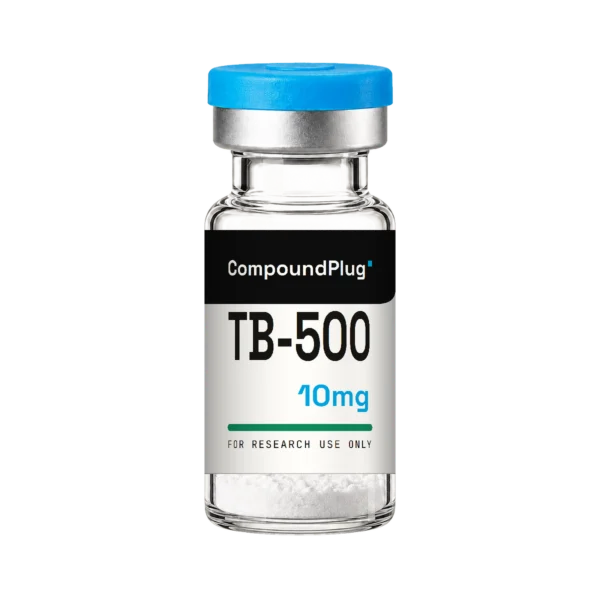
TB-500 Peptide
10mg
$65.00Select options This product has multiple variants. The options may be chosen on the product page -
Healing Peptides
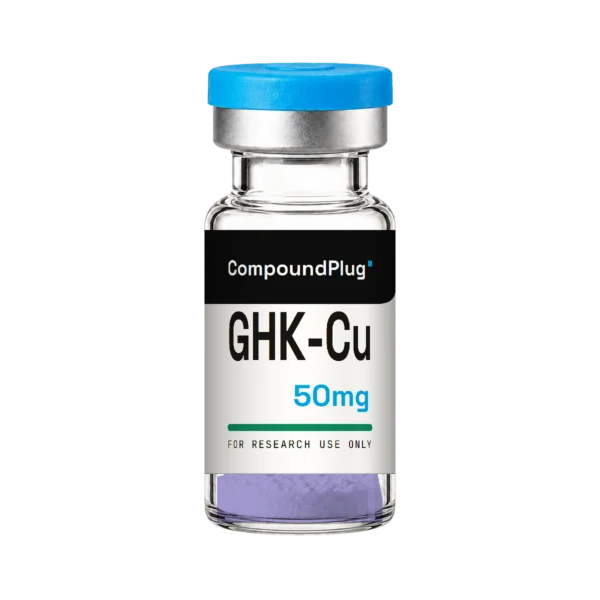
GHK-Cu Peptide
50mg
$44.00Select options This product has multiple variants. The options may be chosen on the product page -
Healing Peptides
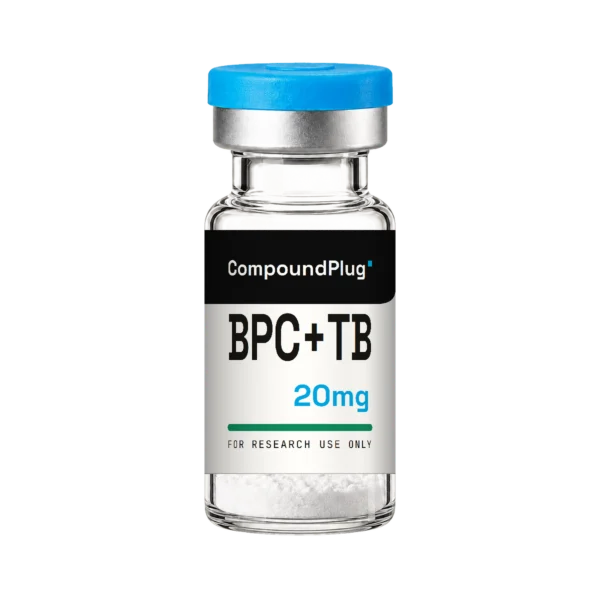
BPC-157 + TB-500 Blend (Wolverine Stack)
10+10mg
$99.00Select options This product has multiple variants. The options may be chosen on the product page