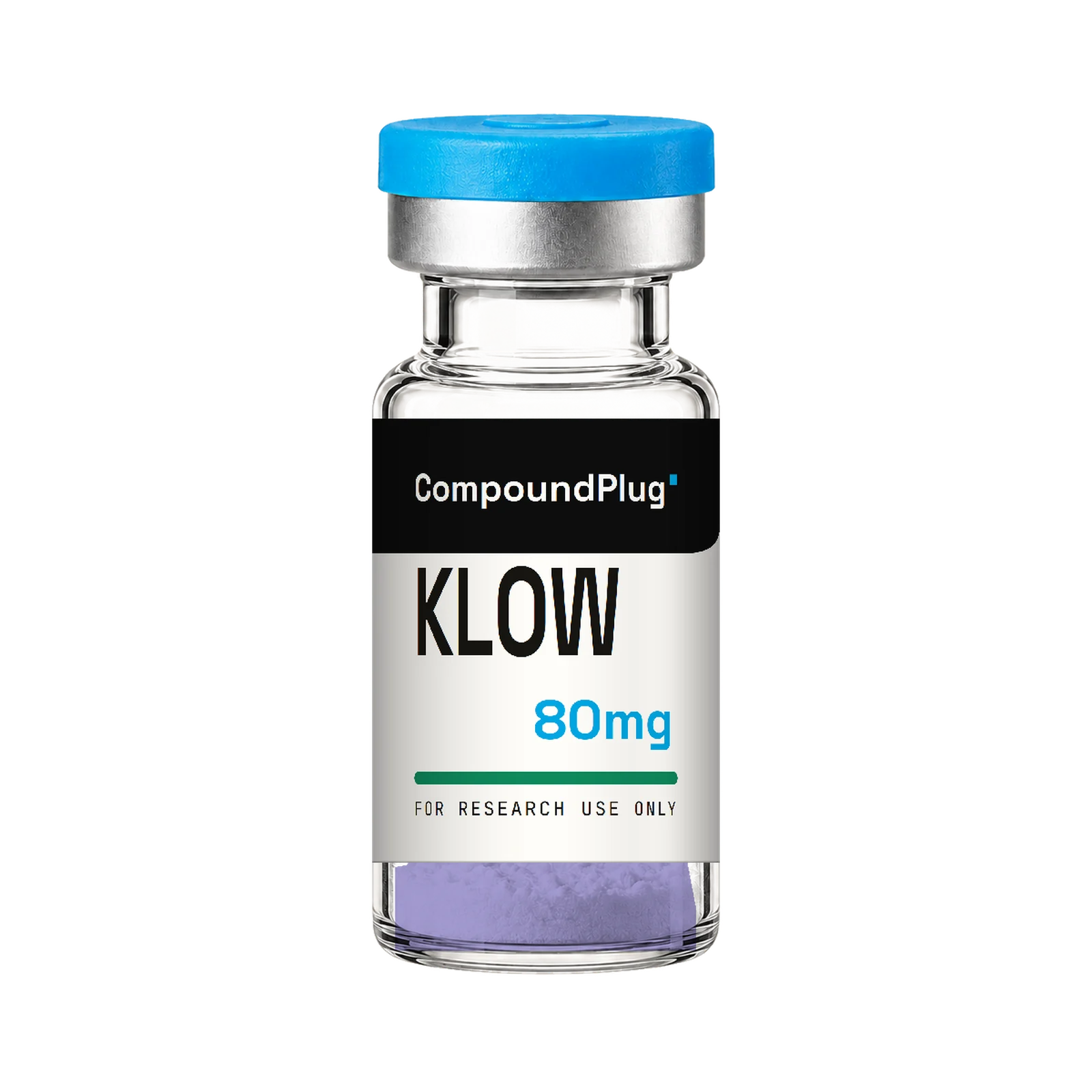
KLOW Peptide Blend
KLOW peptide blend — GHK-Cu 50mg + BPC-157 10mg + TB-500 10mg + KPV 10mg. GLOW plus an inflammation-modulation arm. Full breakdown published. ≥99% HPLC purity, mass-spec verified.
$169.00
- Molecular Formula
- GHK-Cu: C14H24CuN6O4 · TB-500: C212H350N56O78S · BPC-157: C62H98N16O22
- Molecular Weight
- GHK-Cu: 403.93 · TB-500: 4963.44 · BPC-157: 1419.55
- Purity (HPLC)
- ≥99%
- Form
- Lyophilized powder
- HPLC + Mass-Spec Tested
- COA Published Per Lot
- Ships From Canada
- Interac e-Transfer / Crypto
For laboratory research use only. Not for human consumption.
What Is in the KLOW Peptide Blend?
KLOW is GLOW plus KPV. The full breakdown, published:
| Component | Mass | % of blend | Mechanism |
|---|---|---|---|
| GHK-Cu | 50mg | 63% | Copper transport · collagen · gene expression |
| BPC-157 | 10mg | 12.5% | VEGF angiogenesis · nitric oxide |
| TB-500 | 10mg | 12.5% | Actin sequestration · cell migration |
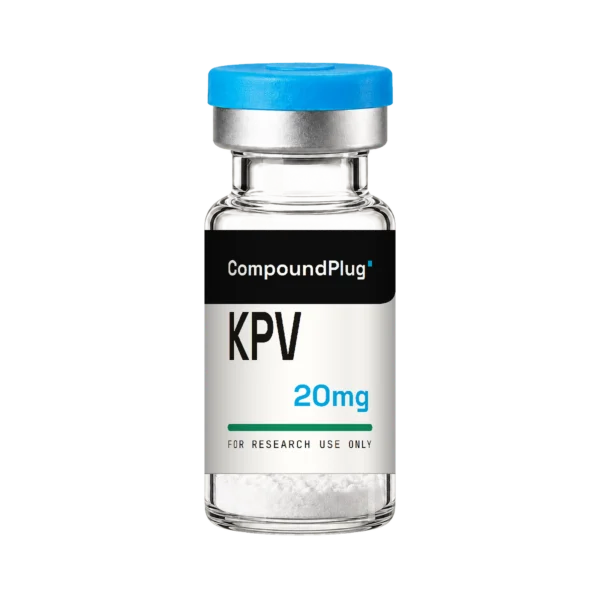
| KPV | 10mg | 12.5% | NF-κB inhibition · inflammation |
| Total | 80mg | ||
As with GLOW, GHK-Cu dominates by mass — 63% of the blend. Most vendors don’t publish that. A buyer who doesn’t know the ratio doesn’t know what they’re buying.
What the KPV Peptide Adds: The Inflammation Arm
KPV is the reason KLOW exists as a separate product, and it is genuinely interesting.
KPV is a tripeptide — Lys-Pro-Val. Three amino acids. And it is the C-terminal fragment of α-MSH, the melanocortin hormone.
The elegant part: KPV has no melanocortin receptor activity
Full α-MSH binds melanocortin receptors — including MC1R, which drives melanogenesis. That’s the mechanism behind Melanotan 2.
KPV does not. The three-residue C-terminal fragment carries α-MSH’s anti-inflammatory activity without its receptor binding. It works through a different route entirely: inhibition of NF-κB signalling — the master transcriptional regulator of the inflammatory response.
It is α-MSH’s anti-inflammatory half, with the pigmentation half removed.
The same design logic that produced PT-141 out of Melanotan 2, and Semax out of ACTH: take a hormone, keep the part you want, drop the receptor you don’t.
The Four Mechanisms
KLOW targets four distinct points in the repair process:
- GHK-Cu — the matrix. Copper delivery for lysyl oxidase (collagen cross-linking) and superoxide dismutase. Broad transcriptional modulation — roughly 4,048 human genes.
- BPC-157 — the supply route. VEGF-mediated angiogenesis; builds the vascular access to a damaged site.
- TB-500 — the workforce. Actin sequestration; moves repair cells to that site.
- KPV — the brake on inflammation. NF-κB inhibition; modulates the inflammatory response that repair happens inside of.
Substrate, supply, migration, and inflammation. That is the research rationale for the four-component formulation.
What the Research Reports
Each component has its own literature. There is no research on this specific four-compound blend — it is a commercial formulation, not a studied intervention.
GHK-Cu — modulation of ~4,048 human genes; collagen synthesis; antioxidant activity via superoxide dismutase.
BPC-157 — tendon repair via the FAK-paxillin pathway (Chang et al., 2011); gastric mucosal protection; VEGF angiogenesis.
TB-500 — wound closure; cardiomyocyte migration; corneal epithelial repair.
KPV — anti-inflammatory activity via NF-κB inhibition, in models of intestinal and dermal inflammation. Notably without melanocortin receptor activity.
All findings are preclinical. KPV was on the FDA’s Category 2 restricted list from 2023; the restriction was lifted in 2026.
KLOW Peptide Dosage in the Published Research
Four compounds, four separate literatures, four separate quantities. There is no published research on this blend and no combined figure exists.
See the individual product pages: GHK-Cu · TB-500 · BPC-157.
CompoundPlug provides no dosing recommendations.
Is KLOW Legal in Canada?
None of the four components is an authorized health product in Canada. None carries a DIN or NPN. None is a controlled substance under the CDSA.
Note: topical cosmetic formulations containing GHK-Cu exist in the consumer market and are regulated separately. CompoundPlug does not supply cosmetic products and makes no cosmetic claims.
See Research Use Only.
Reconstitution & Storage
All four compounds are water-soluble and reconstitute together in the same bacteriostatic water. Add slowly down the vial wall, swirl, never vortex.
The solution will be blue — copper(II) from the GHK-Cu, which is 63% of the blend. Expected and correct.
Molar calculations must be run per component. The four molecular weights span from ~355 (KPV) to 4963.44 (TB-500) — a factor of fourteen. There is no single blend molarity.
Storage: lyophilized and sealed, up to 24 months. Reconstituted, 2–8 °C, 3–4 weeks, protected from light.
KLOW calculator — run each component · Reconstitution guide
Quality & Verification
Independent HPLC and mass-spec testing on all four compounds, published rather than asserted.
Four components means four ways to get identity wrong.
Is the GHK-Cu the copper complex (403.93) or free GHK (340.38)? Copper is the mechanism.
Is the TB-500 full-length Thymosin Beta-4 (4963.44) or the 7-residue fragment (~878)? Five times the mass, same name.
A purity test cannot answer either question. Mass spectrometry measures molecular weight directly — and on a four-component blend, it is the only test that confirms all four molecules are present and correct.
CompoundPlug supplies the copper complex and full-length Thymosin Beta-4, and publishes the molecular weight of every component. Vials measured by peptide content. Published analysis in the COA Library.
Buy the KLOW Blend in Canada
Research-grade KLOW — GHK-Cu 50mg + BPC-157 10mg + TB-500 10mg + KPV 10mg, 80mg total. ≥99% HPLC purity, all four components mass-spec verified, published reference COA.
- Full component breakdown published — including that GHK-Cu is 63% of the blend
- All four molecular weights published
- Ships from within Canada — Canada Post Xpresspost, tracked
- CAD pricing · Interac e-Transfer or crypto · discreet packaging
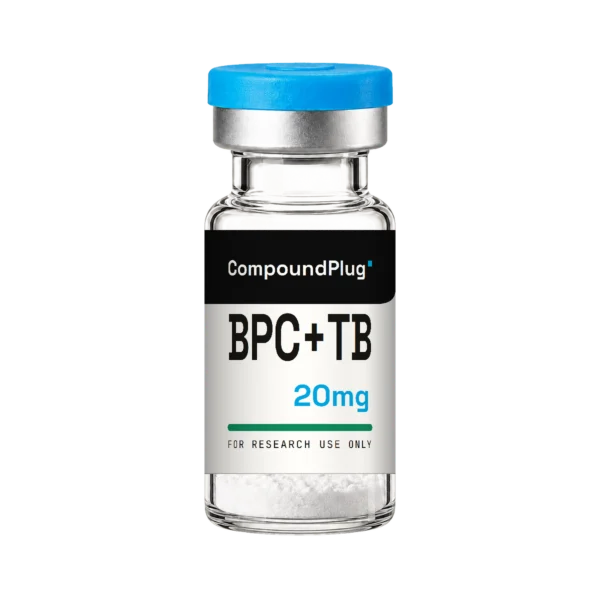
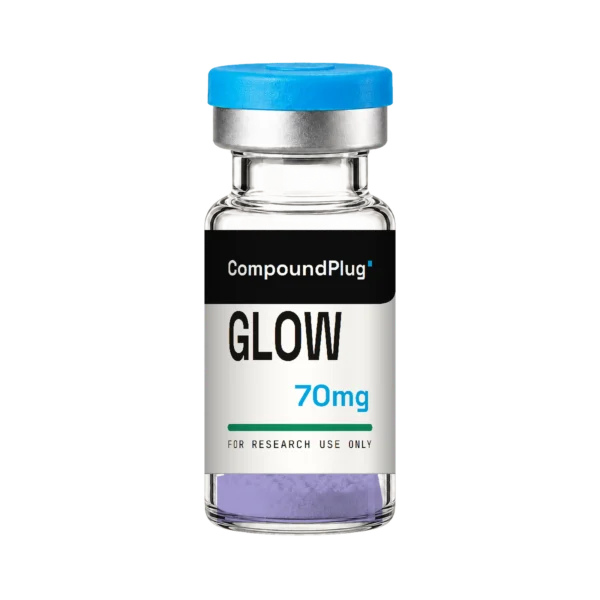
Related: GLOW — the same blend without KPV. Individual components: GHK-Cu · TB-500 · BPC-157. Browse Healing Peptides.
Frequently Asked Questions
What’s in the KLOW blend?
GHK-Cu 50mg, BPC-157 10mg, TB-500 10mg, and KPV 10mg — 80mg total. GHK-Cu is 63% by mass. KLOW is GLOW plus KPV.
What’s the difference between KLOW and GLOW?
KPV. GLOW is GHK-Cu, TB-500, and BPC-157 — matrix substrate, cell migration, and vascular supply. KLOW adds KPV, which contributes an inflammation-modulation arm through NF-κB inhibition. Four mechanisms instead of three.
What is KPV?
A tripeptide — Lys-Pro-Val — and the C-terminal fragment of α-MSH. The elegant part: KPV has no melanocortin receptor activity. Full α-MSH binds MC1R and drives pigmentation; KPV carries α-MSH’s anti-inflammatory activity without that receptor binding, working instead through NF-κB inhibition. It is α-MSH’s anti-inflammatory half with the pigmentation half removed.
Is there research on the KLOW blend itself?
No. Each of the four components has its own literature, but there is no published research on this specific combination. It is a commercial formulation, not a studied intervention.
Why is my KLOW solution blue?
Copper(II) from the GHK-Cu, which is 63% of the blend. Expected and correct.
How is KLOW reconstituted?
All four compounds are water-soluble and dissolve together in the same bacteriostatic water. Molar calculations must be run per component — the four molecular weights span from roughly 355 (KPV) to 4963.44 (TB-500), a factor of fourteen. There is no single blend molarity.
Further reading
Related products
-
Healing Peptides
BPC-157 + TB-500 Blend (Wolverine Stack)
10+10mg
$99.00Select options This product has multiple variants. The options may be chosen on the product page -
Healing Peptides
GLOW Peptide Blend
70mg
$129.00Select options This product has multiple variants. The options may be chosen on the product page -
Healing Peptides
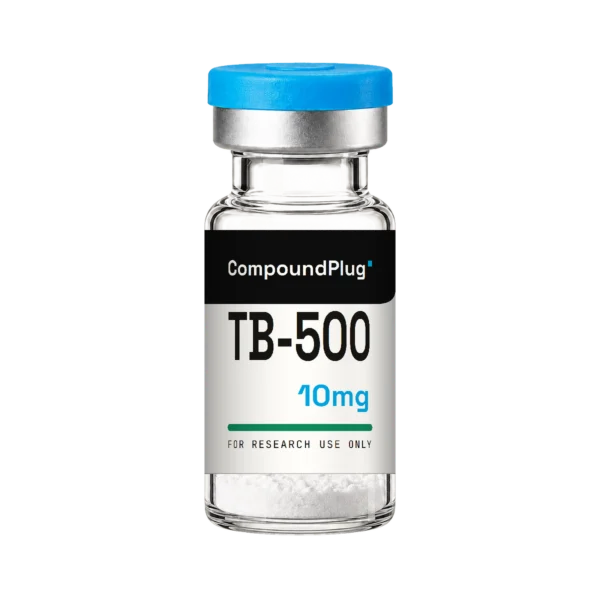
TB-500 Peptide
10mg
$65.00Select options This product has multiple variants. The options may be chosen on the product page